Why application quality matters
An operator licence application is often treated as an administrative task, but the OTC does not assess it that way. The application is a snapshot of whether the business is ready to run goods vehicles lawfully and safely. If the underlying operation is vague, inconsistent or unsupported by evidence, the weaknesses surface during the application stage or shortly after the licence is granted. Strong applications are not simply complete. They show that the operator understands the licence type being sought, the legal entity that will hold it, the vehicles and trailers to be authorised, the operating centre position, the financial standing requirement, the public advertisement obligation and the management systems that will sit behind day-to-day use of the licence.
The practical issue for many applicants is that the regulator does not just want a form filled in correctly. The application has to line up with the real business structure. If the company details on the application do not match Companies House records, if the transport manager appointment has not been thought through, if maintenance arrangements are described in generic terms, or if the operating centre evidence is weak, the file quickly starts to look like a paper exercise. A proper checklist gives the operator a way to test whether the application is coherent before it is exposed to scrutiny.
1. Confirm the legal entity and the correct licence type
The first stage is to identify exactly who is applying and what they are applying for. A sole trader, partnership and limited company are treated differently because the licence attaches to the legal entity, not to a trading style or wider business brand. If the applicant is a limited company, directors, registered office details and company number should all align with the Companies House public record on the day the application is filed. If there has been a recent change in ownership, shareholding or corporate structure, that needs to be understood before the application is started so the licence is not attached to the wrong entity.
The next question is licence type. A restricted licence is not a cheaper version of a standard licence. It is a different regulatory route designed for own-account carriage. If the business carries goods for hire or reward, or its operating model involves wider transport management duties, the route may need to be standard national or standard international instead. Choosing the wrong category at the start creates delay, extra cost and credibility problems, especially if the business model described elsewhere in the application points in a different direction.
2. Build proper operating centre evidence and place the advertisement correctly
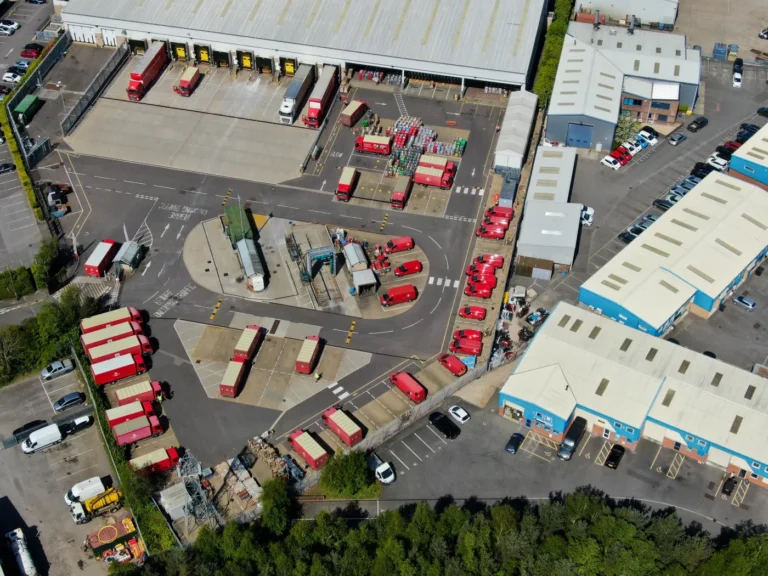
Operating centre issues are a frequent weak point because applicants focus on the address and not on the evidence around it. The OTC will want to know where the vehicles will be based, whether the location can genuinely accommodate the authorised vehicles and trailers, what rights the business has to use the site, and whether the wider planning, access or neighbourhood position creates risk. The checklist should include the full address, the number of parking spaces available, the legal right to occupy the site, and supporting material showing how vehicles will be parked and accessed.
The advertisement step is where many applications stall. A notice must be placed in a local newspaper that circulates in the area of the operating centre, the wording must match the application, the dates must fall within the prescribed window relative to submission, and a clear copy of the advert showing the publication name and date must be retained for upload. If the operator is relying on a third-party yard, a group company site or a shared industrial location, the lease or site owner letter needs to read consistently with the address used in the advertisement and on the application itself.
"The contradictions caseworkers spot most often are simple ones. The Companies House registered office shows one address, the operating centre shows another, the lease is in a director's personal name, and the newspaper advert quotes a slightly different street. None of those are dishonest on their own, but together they look careless and they slow the file down by weeks."
Ian Eltham, transport compliance adviser
3. Check financial standing and supporting records
Financial standing should be treated as a live control issue, not a document-gathering exercise. The file should make clear that the business has the required funds available and that those funds are attributable to the legal entity holding the licence. In practice, that means understanding where the evidence comes from, how recent it is, and whether it will withstand basic scrutiny. Bank evidence, management accounts or other financial material need to be clear, current and consistent with the application entity.
Applicants often create avoidable problems by relying on fragmented evidence from multiple accounts without explaining the picture, or by producing figures that do not obviously belong to the applicant entity. If there is a group-company structure or director funding involved, that should be checked before the file is submitted. The checklist should record both the required financial threshold for the authority sought and the provenance of every piece of evidence being used to prove it.
4. Document maintenance and defect control properly
A maintenance section that simply states "we will use a garage" is not enough. The application needs to point to a real system for planned maintenance inspections, defect reporting, repair control and record retention. Even at application stage, the operator should be able to explain who will carry out PMIs, the inspection interval being adopted, where records will be stored, how daily walkaround defects will be reported, and who will review them. If brake testing, roller testing or laden brake performance evidence will be a key issue for the fleet type involved, that should already be considered.
This matters most where an operator is stepping up from a smaller fleet or from an informal own-account arrangement. A business that has historically relied on workshop conversation and paper-light defect processes may not yet have a file that can survive regulator scrutiny. The checklist forces the operator to test that maintenance planning, inspection intervals and record keeping exist as real controls rather than assumptions.
5. Confirm the transport manager position where required
Where a transport manager is required, the application should already show that the role has been worked out. That means identifying the named person, the basis of the appointment, the operational scope they will cover and the extent to which they will be able to exercise continuous and effective management. If the arrangement is external, it should still make practical sense. A nominal appointment without operational visibility is a frequent weakness and creates the wrong impression from the start.
Transport manager evidence should line up with the vehicle numbers, operating centre, maintenance structure and reporting route described elsewhere in the application. CPC certificate scans, signed TM1 evidence and a clear summary of contracted hours per operating centre should all be ready to upload. If the operator intends to rely heavily on an external consultant, the relationship has to be genuine and technically credible.
6. Manage VOL uploads and common contradictions
The VOL system is straightforward to navigate but unforgiving on detail. Each upload should be a clean PDF or image, named so the caseworker can identify it without opening it, and free of editable form fields that have not been saved down. Bank statements should cover the full required period without gaps. Maintenance contracts should carry signatures and dates. Newspaper adverts should be supplied as the full page or a clear cutting showing masthead and date.
Common contradictions that cause delay or correspondence include the applicant name on VOL not matching Companies House, the operating centre address in the advert not matching the application, vehicle authority exceeding declared parking capacity, PMI intervals on the maintenance agreement differing from the figure entered on VOL, financial evidence held in a personal rather than company account, and a transport manager declared as full-time on TM1 while listed elsewhere on multiple unrelated licences.
7. Pre-submission pack review and post-submission readiness
Before filing, the whole pack should be reviewed as one operational story. The legal entity, operating centre, vehicle authority, financial evidence, maintenance control, transport manager structure and advertisement wording all have to agree with one another. The point of the checklist is to remove contradictions, identify gaps early and submit a coherent, defendable position.
After submission, the OTC may come back with questions, request further evidence, or in some cases call the operator to a public inquiry or preliminary hearing. The operator should keep the full submitted pack accessible, log the submission date, diary the statutory advertisement window, and assign a named person to respond to OTC correspondence within the deadline given. Operators who treat post-submission as the end of the process are the ones who find a request for further information landing during annual leave with nobody briefed to answer it.
Operator Licence Ltd can help review this evidence, identify the gaps and connect you with the right specialist support for operator licence applications and submission readiness.
Operator licence application checklist summary
- Confirm the applicant entity and check it matches the Companies House record on submission day.
- Verify that the chosen licence route reflects the real operating model.
- Check operating centre rights, capacity and supporting evidence.
- Place the statutory advertisement in the correct paper, with matching wording, inside the prescribed window, and keep dated proof.
- Prepare financial standing evidence that clearly belongs to the applicant entity.
- Describe maintenance, PMIs, defects and record keeping as real systems with named owners.
- Confirm transport manager evidence, hours and CPC where the licence type requires it.
- Save VOL uploads as clean, named PDFs with no missing pages or unsigned agreements.
- Read the whole file as one operating narrative before submission and brief a named responder for any OTC follow-up.
What good evidence on the licence record looks like
- Records are current and held in the correct legal name.
- Dates, vehicle registrations, driver names and operating centres match across the application, lease, advert and VOL entries.
- Corrective action on any flagged gap is recorded, assigned and closed before submission.
- Repeated defects, infringements or missing records from any prior operation have management review evidence attached.
- The file can be explained without relying on memory or informal messages.
Official guidance used: this checklist provides general guidance for operators and should be read alongside current GOV.UK guidance, DVSA guidance, Traffic Commissioner statutory guidance, and the specific conditions or undertakings on the operator's licence. It is not legal advice.