
Safety / Fire
Transport Compliance Services
Transport compliance is what an operator licence holder must show every day, including the days between audits. DVSA examiners, the Traffic Commissioner and increasingly large logistics customers look for evidence that licence undertakings are being kept: vehicles maintained on schedule, drivers’ hours managed, defects rectified, and corrective action recorded. Operator Licence Ltd provides practical support focused on the records that stand up in front of a regulator, rather than generic policy documents.
What Our Service Covers
Support is shaped around the evidence DVSA and the Traffic Commissioner actually ask for:
- Operator Licence Applications and Variations: Preparing the licensing record, advertising, financial standing evidence and operating centre detail so the application reflects the real operation.
- Compliance Audits: Sample-based review of PMI sheets, brake test prints, defect reports, driver licence checks, Driver CPC, tachograph downloads and infringement follow-up, with a written findings list and corrective action dates.
- Driver and Vehicle Standards: Practical guidance on inspection intervals, walkaround checks, tachograph downloads within the 28 day vehicle and 90 day driver rules, and the records that prove drivers’ hours infringements were dealt with.
- Training and Management Oversight: Refresher sessions for drivers and transport office staff, plus support for Transport Managers evidencing continuous and effective management under their TM1 declaration.
- Public Inquiry Representation: Document bundle preparation, undertakings analysis and rehearsal for hearings before the Traffic Commissioner, including corrective action evidence packs.
How It Works
The process is structured so that every output is something a DVSA examiner or Traffic Commissioner would recognise.
- Initial Consultation: A no-obligation discussion to understand the licence type, vehicle numbers, operating centres and any current DVSA or Traffic Commissioner contact.
- Tailored Compliance Plan: A written plan setting out evidence gaps, named responsibilities, deadlines and the records that need to be produced or improved.
- Implementation: Hands-on support to put the plan into practice, including maintenance planner setup, tachograph routines, infringement letters and management review meetings.
- Regular Reviews: Follow-up checks to test that the system is being used rather than parked, with updates if regulations or licence undertakings change.
For background on licensing rules, read this page alongside GOV.UK and the undertakings listed on your own operator licence.
Who Needs It
Transport compliance support is used across road transport, including:
- Hauliers: Goods operators running standard national or international licences who must hold maintenance, driver and tachograph evidence for the full licence period.
- Passenger Transport Operators: PSV and coach operators with PSV Operator Licence undertakings, including accessibility and route-specific records.
- Fleet Managers: In-house compliance leads who want an independent view of records before a DVSA visit.
- New Entrants: Businesses preparing a first operator licence application who need the systems in place before vehicles are specified.
What Good Compliance Evidence Looks Like
Strong compliance records share a few features. PMI inspections happen on the published interval, with a roller brake test result an engineer can defend. Defect reports show who reported the fault, who repaired it, the date back into service, and the link to the next PMI. Tachograph downloads run within the 28 day vehicle and 90 day driver rules, with infringement letters signed by the driver and the Transport Manager. The operator licence record at the Office of the Traffic Commissioner matches the operating centre, authorisation and vehicle list actually in use. Where any of these break down, a DVSA examiner will follow the thread until they find the cause.
Andrew Logan, transport compliance adviser: “On one file review the maintenance planner looked tidy, but brake test prints had been misfiled for three months and one vehicle had no record at all. That single gap was the first thing raised at the Traffic Commissioner’s office. A short, honest paper trail showing the gap was found and fixed is worth more than a polished spreadsheet with nothing behind it.”
Get Started Today
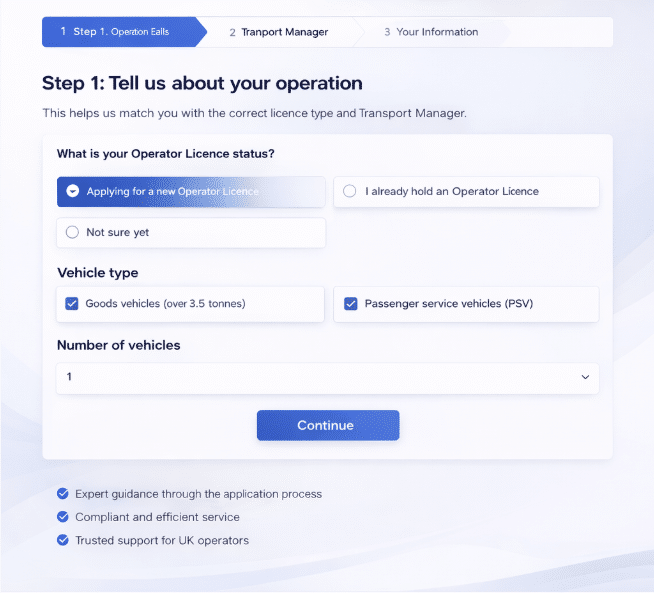
Operator Licence Ltd can help review this evidence, identify the gaps and connect you with the right specialist support for transport compliance. To begin, complete the operator licence assessment so maintenance, driver, tachograph and correspondence records can be evaluated before a DVSA inspection or Traffic Commissioner enquiry.
Operator Licence Ltd can help review this evidence, identify the gaps and connect you with the right specialist support for transport compliance.
Transport Compliance Services

Licence evidence
Maintenance, tachograph and driver records should match the undertakings on the operator licence.

Regulator-ready records
DVSA examiners and the Traffic Commissioner look for dated evidence, not general assurances.

Practical review
Support is shaped around the licence type, vehicle numbers, operating centres and current regulator contact.

Written action plan
A written plan sets out evidence gaps, named responsibilities, deadlines and records to improve.
Transport Compliance Services
Transport compliance is what an operator licence holder must show every day, including the days between audits. DVSA examiners and the Traffic Commissioner look for evidence that licence undertakings are being kept.
Vehicles maintained on schedule, drivers’ hours managed, defects rectified, and corrective action recorded are the records that stand up in front of a regulator.

What Our Service Covers
- Operator licence applications and variations.
- Compliance audits covering PMI sheets, brake tests, defect reports, driver checks and tachograph downloads.
- Driver and vehicle standards, including inspection intervals and infringement follow-up.
- Training and management oversight for Transport Managers and transport office staff.
- Public inquiry document bundle preparation and corrective action evidence packs.
How It Works
The process starts with a no-obligation discussion to understand the licence type, vehicle numbers, operating centres and any current DVSA or Traffic Commissioner contact.
The output is a written plan setting out evidence gaps, named responsibilities, deadlines and the records that need to be produced or improved.
What Good Evidence Looks Like
Strong compliance records share a few features:
- PMI inspections happen on the published interval.
- Roller brake test results can be defended by an engineer.
- Defect reports show who reported the fault, who repaired it and the date back into service.
- Tachograph downloads run within the 28 day vehicle and 90 day driver rules.
- The Office of the Traffic Commissioner record matches the operating centre, authorisation and vehicle list actually in use.
Specialist Compliance Review
Andrew Logan, transport compliance adviser: “On one file review the maintenance planner looked tidy, but brake test prints had been misfiled for three months and one vehicle had no record at all. That single gap was the first thing raised at the Traffic Commissioner’s office. A short, honest paper trail showing the gap was found and fixed is worth more than a polished spreadsheet with nothing behind it.”
Who Needs It
Use the evidence here to check the transport compliance issue against the licence record, operational records and any regulator deadline.
Evidence-led support
Support focuses on the evidence DVSA and the Traffic Commissioner actually ask for.
Corrective action
Corrective action should show what changed, who owns it, and the record that proves it was completed.
Regular reviews
Follow-up checks test that the system is being used rather than parked after the first review.
Compliance evidence
Compliance evidence should be specific enough for a DVSA examiner or Traffic Commissioner to follow without relying on verbal explanation.
Evidence and Review Process
What does transport compliance support cover?
It covers operator licence applications and variations, compliance audits, driver and vehicle standards, training, management oversight and Traffic Commissioner evidence preparation.
What good compliance evidence looks like?
Good evidence shows vehicles maintained on schedule, defects rectified, tachograph downloads completed within the required cycle, and corrective action recorded.
Who needs transport compliance services?
Hauliers, passenger transport operators, fleet managers and new entrants use support when licence records, driver files, tachographs or maintenance evidence need independent review.
How does the process work?
The process starts with an initial discussion, then a written plan, implementation support and regular reviews to check that the system is being used.
Where should official guidance be checked?
Read this page alongside GOV.UK and the undertakings listed on your own operator licence.
What records are reviewed?
PMI sheets, brake test prints, defect reports, driver licence checks, Driver CPC records, tachograph downloads and infringement follow-up are commonly reviewed.
When is the risk higher?
Risk rises after repeated defects, missed inspections, weak brake evidence, tachograph gaps, DVSA contact, OCRS movement or Traffic Commissioner correspondence.
What should a compliance plan include?
A plan should set out evidence gaps, named responsibilities, deadlines, records to improve and follow-up checks.
Can this support a public inquiry?
It can support preparation when the records show what changed, who owns each action, and the evidence proving completion.
How do we get started?
Complete the operator licence assessment so maintenance, driver, tachograph and correspondence records can be evaluated.
Evidence Review
For background on licensing rules, read this page alongside GOV.UK and the undertakings listed on your own operator licence.
Related Transport Guidance
10 October 2023
Evidence and Review Process

01 February 2024
Driver and Fleet Record Checks
29 November 2023