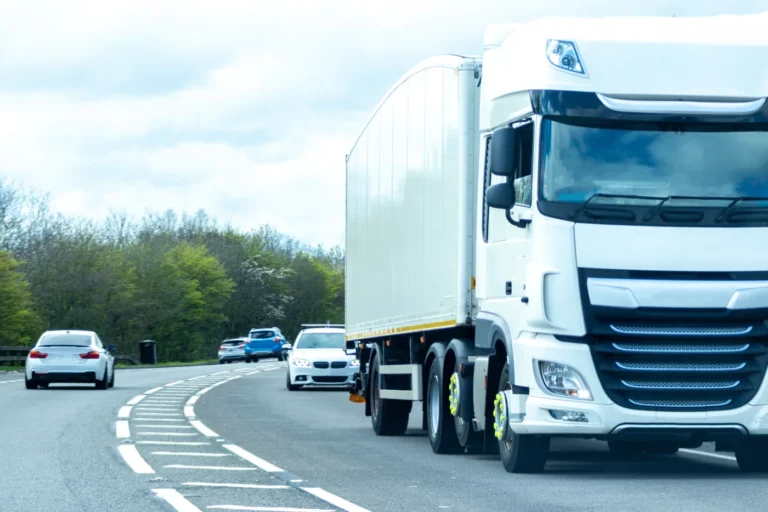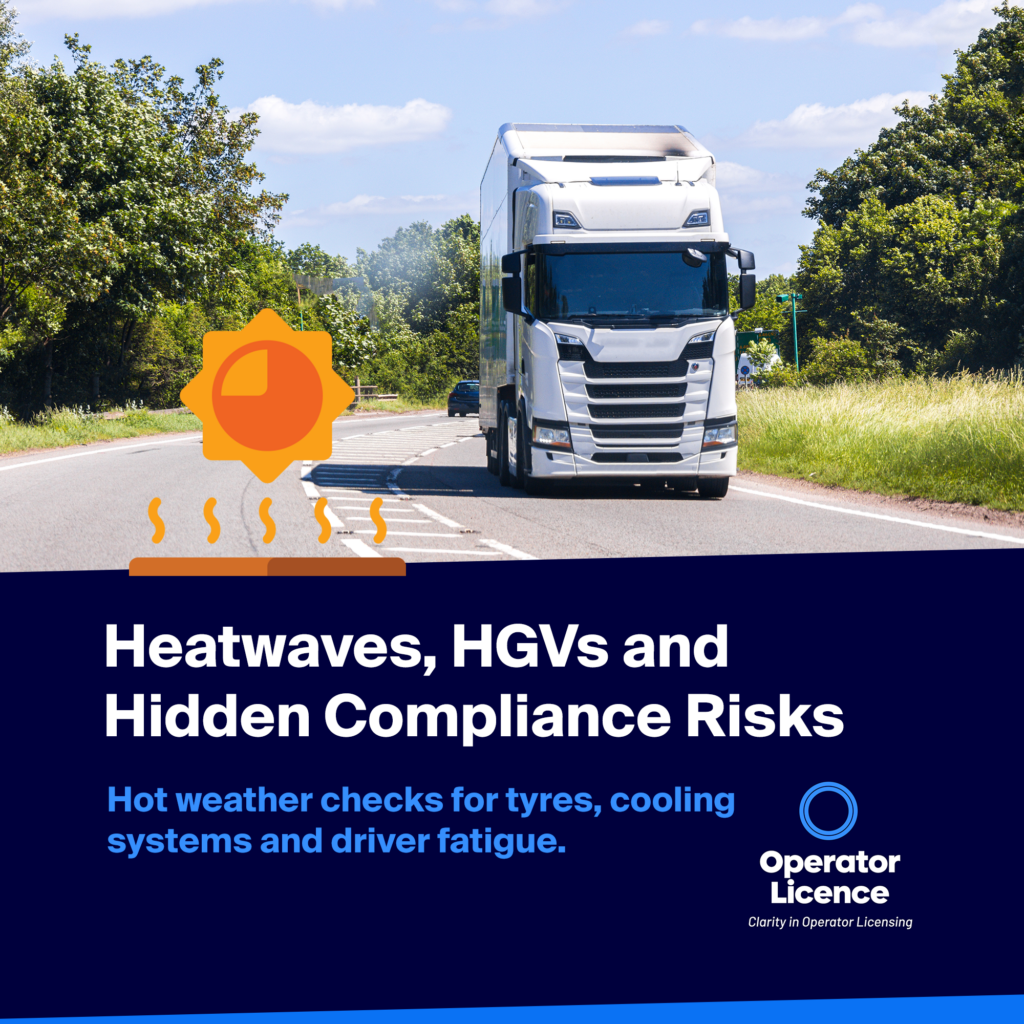
Hot weather can expose weak points quickly
Periods of unusually hot weather can place extra strain on both commercial vehicles and drivers, particularly during long motorway work, urban stop-start delivery routes and heavily loaded operations.
Tyres can run hotter for longer periods, cooling systems may struggle under pressure, cab temperatures can become uncomfortable, and driver fatigue may appear earlier than expected on difficult routes.
Although the UK only seems to get a handful of genuinely hot days each year before everyone starts arguing over fans in the traffic office, operators still need a workable plan when those conditions arrive.
This is not official DVSA guidance. These are practical good-practice considerations that operators and Transport Managers may wish to review during periods of extreme heat.
Why hot weather matters for fleet operations
Summer conditions can increase operational risk in ways that are not always obvious during normal temperatures.
Higher road and ambient temperatures may contribute to:
- higher tyre temperatures during motorway work
- increased risk of tyre damage or blowouts where condition is already poor
- overheating engines or cooling systems under load
- reduced driver concentration due to heat and fatigue
- greater strain on air conditioning and ventilation systems
- longer recovery times after vehicle breakdowns at roadside
- increased discomfort during loading, unloading and waiting periods
Hot weather often exposes problems that already existed in the operation rather than creating entirely new ones. Weak maintenance control, marginal tyre condition or poor cab ventilation can become much more noticeable during prolonged heat.
Tyre checks during hot weather
Tyres already work hard during normal operating conditions. Extended motorway driving in high temperatures can increase operating temperatures further, particularly on heavily loaded vehicles.
Operators may wish to increase the focus on tyre condition during summer periods, especially for long-distance work.
Practical checks may include:
- checking tyre pressures more carefully before departure
- reviewing tread condition across the full tyre face
- checking for cuts, bulges or exposed cords
- monitoring uneven wear patterns
- reviewing overloaded axle risks
- ensuring wheel nut indicators are present and aligned where fitted
- paying closer attention to trailer tyres which are sometimes overlooked
Where vehicles are operating on long motorway routes or carrying heavy loads during extreme temperatures, some operators may also choose to increase informal tyre observations during the working day.
Cooling systems and radiator inspections
Cooling systems that appear acceptable during mild weather can become problematic during hotter conditions or heavy traffic delays.
Simple maintenance checks may help identify issues before roadside breakdowns occur.
Areas commonly reviewed include:
- coolant levels and condition
- radiator cleanliness and airflow restriction
- signs of coolant leaks
- damaged hoses or loose clips
- warning light history
- fan operation and belt condition
- vehicle temperature readings reported by drivers
Repeated overheating reports should not be treated as minor seasonal complaints. Persistent high-temperature issues can quickly develop into reliability or roadworthiness concerns if ignored.
Cab temperature and driver welfare
Driver welfare is also an operational issue. High cab temperatures, poor ventilation and dehydration can affect concentration, patience and fatigue levels during long shifts.
Operators may wish to encourage drivers to report:
- air conditioning defects
- poor cab airflow
- excessive heat inside the vehicle
- symptoms of dehydration or heat stress
- difficulty maintaining concentration during long periods in traffic
In practice, some fleets also review:
- availability of drinking water
- route timing during peak heat periods
- extended waiting or queueing conditions
- additional welfare stops during difficult weather
- delivery schedules where loading sites become excessively hot
Fatigue and additional breaks
The legal drivers’ hours and break structure remains the formal requirement, but operators should also recognise that difficult weather conditions can affect real-world fatigue levels.
Long-distance motorway work in high temperatures may increase tiredness earlier than expected, particularly where traffic delays, poor sleep, heavy manual handling or uncomfortable cab conditions are involved.
Some operators may choose to allow additional short breaks where drivers are showing signs of fatigue, overheating or reduced concentration.
That does not replace drivers’ hours rules or Working Time requirements, but practical fatigue management during extreme weather can still form part of sensible operational planning.
Simple hot weather planning checks
Transport Managers and operators may wish to review the following during periods of extreme heat:
| Area | Practical check | Reason |
|---|---|---|
| Tyres | Additional visual checks and pressure monitoring | Heat increases stress on already weak tyres |
| Cooling systems | Inspect coolant levels, leaks and radiator condition | Reduces overheating risk |
| Cab welfare | Review ventilation and air conditioning defects | Helps manage driver concentration and comfort |
| Route planning | Consider timing around peak heat periods | May reduce fatigue and delays |
| Driver welfare | Monitor signs of heat stress or dehydration | Supports safer operations |
| Break planning | Allow flexibility where conditions become difficult | Helps reduce fatigue-related risk |
Practical planning rather than panic
Most fleets will continue operating normally during warm weather, but extreme temperatures can expose weak maintenance standards, poor vehicle condition or inadequate welfare planning more quickly than usual.
Simple seasonal checks and sensible operational planning may help reduce roadside breakdowns, tyre problems, overheating issues and fatigue-related incidents during hotter periods.
Operators should continue to follow current GOV.UK, DVSA and manufacturer guidance where relevant. This article is intended as practical operational guidance rather than legal or regulatory advice.
Official guidance to keep alongside this
For formal requirements, operators should continue to use the current GOV.UK guidance on HGV daily walkaround checks, drivers' hours and the DVSA guide to maintaining roadworthiness. Hot-weather planning should support those duties, not replace them.
Need help reviewing the weak points?
If hot weather has exposed tyre, cooling-system, defect-reporting or driver-welfare gaps in your operation, use our operator licence assessment to start a structured review before a small summer issue becomes a larger compliance problem.